








What Makes A Carnivore?
- December 4, 2025
- 4:20 pm
Dogs Are Carnivores
I know you’ve heard this so many times now: dogs are meat-eaters and, as such, require a diet that’s founded on meat. Can they have some fruits and veggies in their diets? Absolutely. Can they have some grains in their diets? For sure. As long as the bulk of the diet is meat. There are a couple pieces of biological evidence that support this idea:
Teeth & Mouth Structure
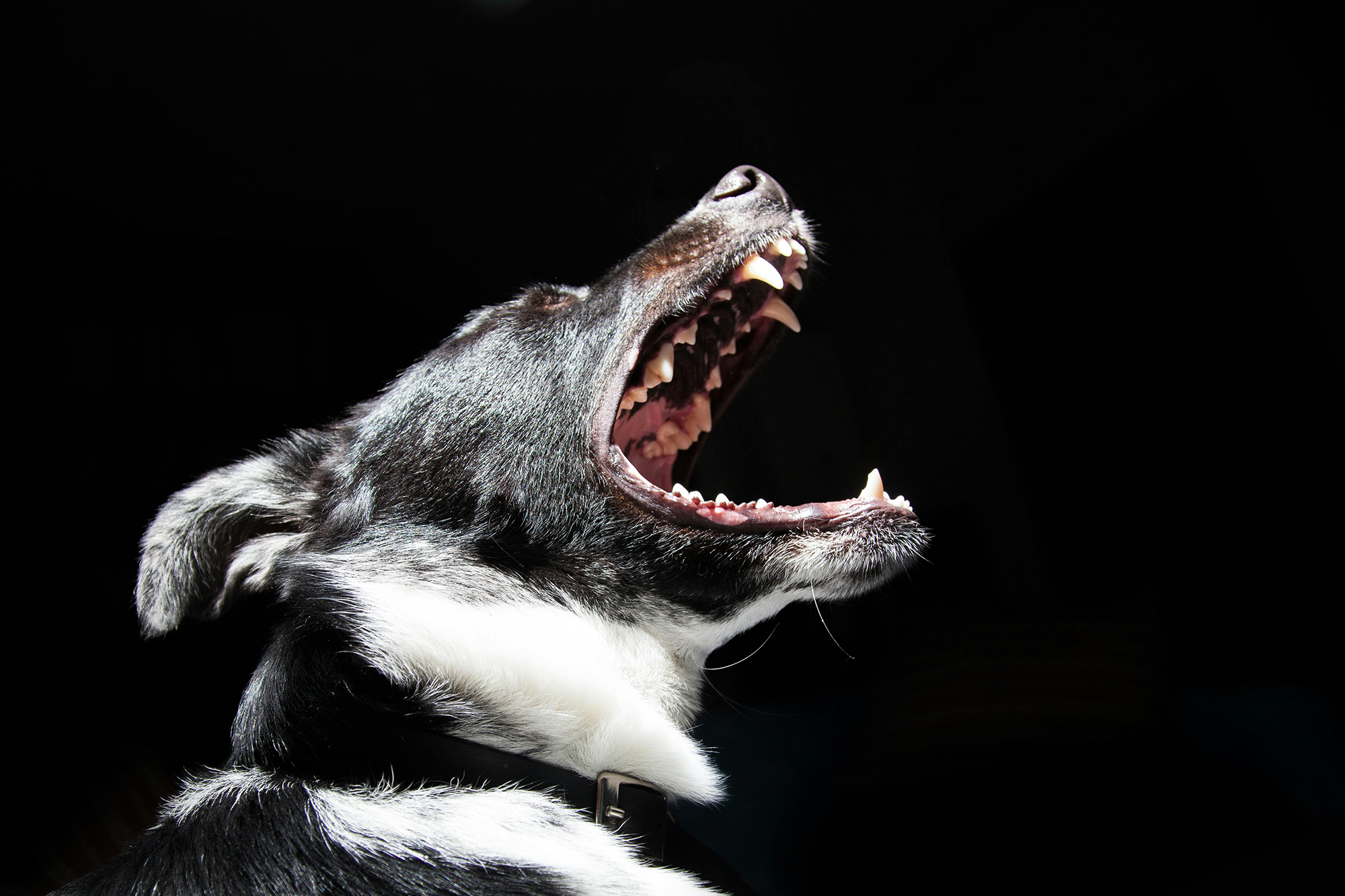
Carnivores have tightly-interdigitated teeth for ripping and tearing food, or crunching bones. Their canine teeth are also much larger. Overall, a carnivore’s teeth and mouth are shaped, structured, and aligned differently than an omnivore’s or herbivore’s to accommodate their different dietary requirements.
Their teeth aren’t built for long-term chewing projects either. Cows chew incessantly, and this chewing is great contributor to the overall digestion of their grass-based diet. Herbivores and omnivores grind up their food into mush, whereas carnivores only tear and chomp food into smaller chunks that can be swallowed.
Gastrointestinal Length
Carnivores also have a shorter gastrointestinal tract meant for easily-digestible foods. Humans have a much longer tract that allows complex foods more time to break down before elimination. A carnivore’s digestive tract is meant to handle simpler foods (ie – meat), requiring less of a journey for the breakdown process.
Fun tidbit: This shorter transit time is also what keeps dogs from becoming horribly ill like humans when they get into yucky things. A dog who sniffed out the cat’s litter box and snuck a few nibbles won’t be affected by salmonella. It will likely be swept out of their system or obliterated by the dog’s mega-strong stomach acid before it even has time to leave a mark.
Salivary Amylase (or Lack There Of…)
Carnivores lack salivary amylase (the enzyme necessary for breaking down carbs). Dogs have only a little bit, and cats have none. This makes it more difficult for them to break down carbs, as the bulk of the work in breaking down these carbs is done during the chewing stage.
Interestingly, domesticated dogs have adapted to the high-carb diets we so often feed them. To make up for the small amount of salivary amylase their bodies produce, the pancreas attempts to pick up the slack. It shifts into overdrive, producing tons and tons of amylase to battle all the incoming carbs. When the pancreas exhausts itself and can no longer keep up is when we start to see dogs diagnosed with pancreatitis.
How To Nourish A Carnivore:
Knowing the above, we can make conscious choices to give our carnivores a diet that doesn’t require their bodies to adapt so much. High-protein (and lower-carb) meals are much easier on your dog’s biological digestive process.
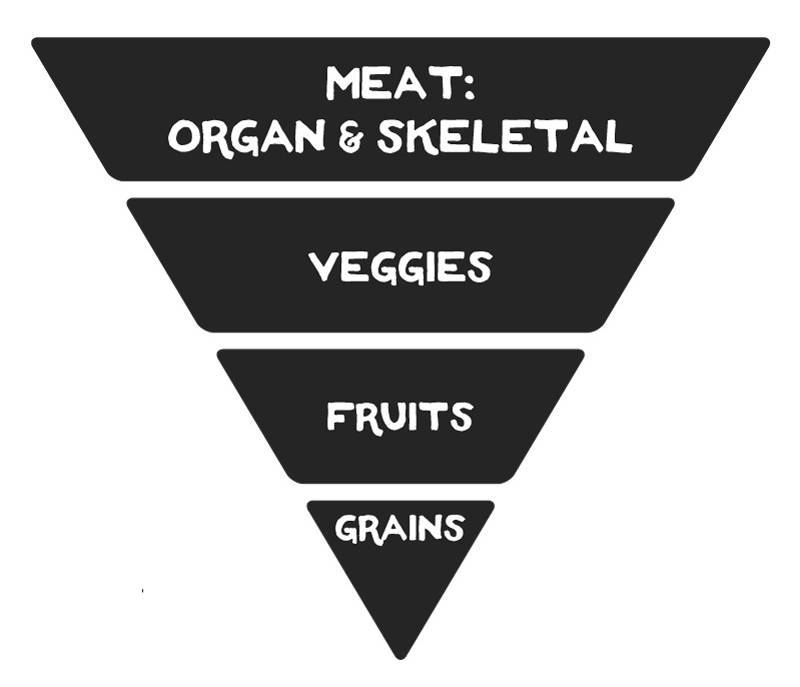
Check out the appropriate food pyramid for dogs. The majority of their diets should consist of animal protein, followed by veggies and fruits, and finished with a very small of amount of grains.
Additionally, probiotic and digestive enzyme supplements can really work wonders for the dog who lives on a high-carb/kibble diet. (Looking for a good digestive supplement? We know a guy…).
Simple Food Project diets are low in carb count and high in animal protein, both skeletal and organ meat. And you can rest assured knowing all his nourishment is coming from the 14 whole foods on the label and never synthetic vitamins or minerals. Give one of our recipes a try!
Dr. Chris Bessent
Chris Bessent, DVM, MSOM, Dipl. OM, L.Ac. has over thirty years of experience in veterinary medicine including certificates in veterinary acupuncture, veterinary chiropractic and veterinary Chinese herbology. Imbued with Eastern philosophy and the knowledge that food is the foundation of health, Dr. Bessent also received her degree in veterinary nutrition and began to formulate recipes fit for a carnivore from nothing but whole foods. Currently, she divides her time between the Simple Food Project and Herbsmith, both of which are owned and operated out of her facilities in southeastern Wisconsin.
Dr. Chris Bessent
Dr. Chris Bessent has over thirty years of experience in veterinary medicine, including certificates in veterinary acupuncture, chiropractic, and Chinese herbology, as well as a master’s degree in acupuncture & oriental medicine and bachelor’s degrees in nutrition and animal science.