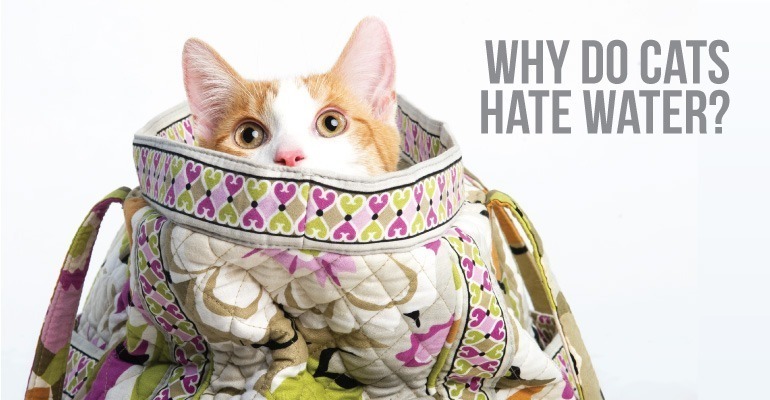
Not all cats have an aversion to water, but for most, bathtubs and unexpected swims are likely last on the list of enjoyable things. But why does an animal that spends nearly half of it’s life cleaning itself seem to hate water so much? Here are a few reasons that your furry feline friend might not be water’s number one fan.
1. Their evolution didn't involve much water
Water is not a huge part of a cat’s evolution – Most domestic cats are descendants from felines that thrived in dry and arid environments, namely the Arabian peninsula. Because this area is free of large bodies of water, most of our domesticated friends’ ancestors simply never learned (or had to learn) to swim. And not only this, but a team of researchers from Texas A&M and the University of Missouri consider house cats today are only ‘semi-domesticated’ which means they are pretty much always on the lookout for threats.
2. Water weighs them down
Caution: heavy when wet – When a cat’s body is submerged in water, their coats soak up that moisture. Though the top-layer of a cat’s coat is generally pretty water-resistant and will deflect any small drops, the water from a bath or a good soak weighs a cat down tremendously. This can the cat feel uncomfortable as they aren’t able to be as nimble and quick as they need to be and having a wet coat makes them vulnerable to danger. Having a wet coat can also cause core body temperature to drop. A cat’s temperature is higher than a humans and it is more difficult for them to get warm and stay that way. Wet coat = chilly kitty.
3. All the smells!
A cat’s nose is sensitive to smells – Cat’s have an impeccable sense of smell and their nose contains almost 200 million olfactory receptors (humans have roughly 5 million). This makes cats very sensitive to the chemicals in tap water and the ingredients in that strawberry-scented pet shampoo.
4. Baths insult their independence
Cat’s are very much independent creatures and prefer to experience life on their own terms (I am sure we don’t have to tell you that). Carrying them into the bathroom for a bath isn’t their idea of being independent, nor is it likely their idea of quality time spent with you. If your cat is apprehensive towards water, it’s best not to push it. Because really, cats do most of their own heavy lifting: they groom themselves, so baths are usually not needed. If your cat has gotten into something less than pleasant, try wiping them down with a damp cloth or even a pet-wipe before attempting to give them a bath.
There are, of course, the outliers
Some cats enjoy water and can be intrigued by the dribble from a faucet or the cup next to your bed. There are breeds of cats that even enjoy water, such as the Turkish Van and the Savannah Cat. However, if your cat is one of those that isn’t a big fan of getting wet, we recommend steering clear of baths and letting them experience H20 on their own terms.